
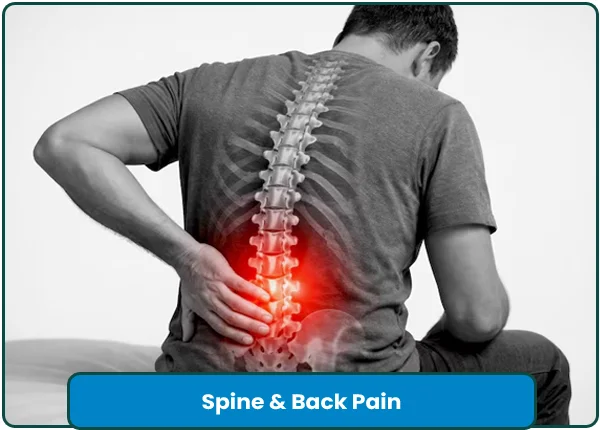
Spine and Back Pain
Spine and Back Pain Treatment in Noida
Back pain is a common musculoskeletal problem that can affect people of different ages and activity levels. While occasional discomfort may improve with rest and appropriate care, persistent or severe pain can interfere with work, sleep, walking, and everyday activities. Spine and Back Pain Treatment in Noida focuses on identifying the underlying cause of symptoms and developing an appropriate treatment plan.
Dr. Rahul Ray provides orthopaedic evaluation for patients experiencing back pain, spinal discomfort, restricted movement, and symptoms that may affect daily activities. Treatment is individualized according to the patient's symptoms, clinical findings, imaging results, and overall health.
Understanding Spine and Back Pain
The spine is a complex structure made up of bones, discs, joints, ligaments, muscles, and nerves. Problems affecting any of these structures can contribute to back or neck discomfort.
Back pain may be short-term or persistent. It can occur after an injury, due to repetitive strain, poor posture, degenerative changes, or other spinal conditions.
Some patients experience only localized pain, while others may develop symptoms that extend into the buttocks, hips, arms, or legs.
Common Causes of Back Pain
Back pain can have several causes. Common contributing factors include:
- Muscle or ligament strain
- Poor posture
- Disc-related problems
- Degenerative spinal changes
- Spinal arthritis
- Nerve compression
- Previous injuries
- Repetitive physical activity
- Prolonged sitting or inactivity
The cause cannot always be determined from symptoms alone. A clinical assessment is useful when pain is persistent, recurrent, or associated with other symptoms.
Symptoms Associated With Spine Problems
Back and spine conditions can present in different ways. Patients may experience:
- Lower back pain
- Upper or middle back discomfort
- Neck pain
- Stiffness
- Restricted movement
- Pain extending into the leg or arm
- Tingling or numbness
- Muscle weakness
- Difficulty with certain physical activities
The location, duration, intensity, and pattern of symptoms can provide useful information during evaluation.
When Should Back Pain Be Evaluated?
Mild back pain may improve with appropriate rest and conservative care. However, specialist evaluation is advisable when pain persists, repeatedly returns, interferes with daily activities, or is associated with neurological symptoms.
Prompt medical assessment is particularly important when back pain follows significant trauma or is accompanied by progressive weakness, significant numbness, or other concerning symptoms.
Diagnosis of Spine Conditions
Diagnosis begins with a detailed medical history and physical examination. Dr. Rahul Ray may evaluate posture, spinal movement, muscle strength, reflexes, sensation, and other relevant findings.
Imaging may be recommended when clinically appropriate. X-rays can help assess the bones and alignment of the spine, while MRI may provide detailed information about discs, nerves, spinal cord, and other soft tissues.
The choice of investigation depends on the patient's symptoms and clinical findings.
Conservative Treatment for Back Pain
Many back pain conditions can initially be managed without surgery. Treatment depends on the underlying cause and may include activity modification, medication, physiotherapy, and exercises.
Conservative treatment may focus on:
- Reducing pain and inflammation
- Improving spinal movement
- Strengthening supporting muscles
- Improving posture
- Increasing flexibility
- Gradually returning to normal activities
A structured approach can help patients manage symptoms while improving physical function.
Physiotherapy and Rehabilitation
Physiotherapy may play an important role in the management of several spine and back conditions. A rehabilitation programme can be designed according to the patient's symptoms, physical condition, and functional requirements.
Exercises may focus on core strength, flexibility, posture, balance, and movement control. Patients may also be advised on appropriate activity modification and techniques for protecting the back during daily activities.
Regular rehabilitation can support long-term functional improvement when combined with appropriate medical care.
Treatment for Nerve-Related Symptoms
Some spinal conditions can cause irritation or compression of a nerve, resulting in pain, tingling, numbness, or weakness that extends into an arm or leg.
These symptoms require careful evaluation to identify the affected spinal level and underlying cause. Treatment may initially involve conservative measures, depending on the severity and duration of symptoms.
If symptoms persist or neurological problems progress, further investigations and specialist treatment may be required.
When Is Surgery Considered?
Most cases of back pain do not automatically require surgery. Surgical treatment is generally considered only when there is a specific structural problem for which surgery may provide an appropriate benefit.
The decision may depend on:
- Severity and duration of symptoms
- Neurological findings
- Imaging results
- Response to conservative treatment
- Functional limitations
- Overall health
A detailed evaluation helps determine whether continued non-surgical treatment or a surgical approach is appropriate.
Managing Back Pain in Daily Life
Certain lifestyle and activity measures can support spinal health. Maintaining an appropriate level of physical activity, avoiding prolonged inactivity, using proper lifting techniques, and maintaining good posture can be helpful.
Patients with recurrent back pain may benefit from learning how to modify activities that repeatedly aggravate their symptoms.
However, persistent or severe symptoms should not be managed solely through self-care without appropriate evaluation.
Recovery and Long-Term Spine Care
Recovery depends on the cause and severity of the spinal condition. Some patients improve within a short period with conservative treatment, while chronic or structural problems may require longer-term management.
Follow-up helps monitor symptoms and functional progress. Rehabilitation and appropriate lifestyle modifications can also support long-term spinal health.
Why Choose Dr. Rahul Ray?
Dr. Rahul Ray provides individualized orthopaedic assessment for patients experiencing back pain and other musculoskeletal symptoms. Treatment is planned according to the underlying condition rather than treating every case of back pain in the same way.
For patients seeking Spine and Back Pain Treatment in Noida, appropriate diagnosis, personalized treatment, rehabilitation, and follow-up can help manage symptoms and support better mobility and function.
Frequently Asked Questions
1. What are common causes of back pain?
Back pain can result from muscle strain, poor posture, disc problems, degenerative changes, spinal arthritis, injuries, nerve compression, and repetitive physical stress.
2. When should I consult a specialist for back pain?
You should consider specialist evaluation when back pain persists, repeatedly returns, affects daily activities, or is accompanied by numbness, tingling, weakness, or other concerning symptoms.
3. Does every case of back pain require an MRI?
No. Imaging is recommended based on the patient's symptoms, examination findings, duration of pain, and clinical concerns. MRI is used when detailed evaluation of discs, nerves, or other soft tissues is required.
4. Can back pain improve without surgery?
Yes. Many back pain conditions can improve with appropriate conservative treatment, including activity modification, medication, physiotherapy, and rehabilitation.
5. When is spine surgery considered?
Surgery may be considered when a specific structural spinal problem is identified and symptoms remain significant despite appropriate non-surgical treatment, or when certain neurological problems require surgical management.
6. Can physiotherapy help with back pain?
Physiotherapy can help selected patients improve movement, strength, flexibility, posture, and functional ability. The programme should be based on the underlying condition and individual needs.
Category : Spine and Back Pain