
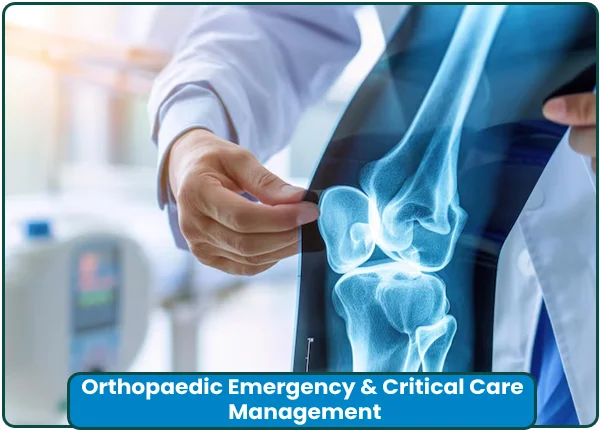
Orthopaedic Emergency and Critical Care
Orthopaedic Emergency and Critical Care Management in Noida
Orthopaedic emergencies can occur suddenly and may result from road accidents, falls, sports injuries, workplace accidents, or other forms of trauma. Severe fractures, joint dislocations, crush injuries, open wounds, and injuries associated with multiple trauma require timely assessment and appropriate treatment. Orthopaedic Emergency and Critical Care Management in Noida focuses on rapid evaluation, stabilization, diagnosis, and treatment of serious musculoskeletal conditions.
Dr. Rahul Ray provides specialist orthopaedic assessment for emergency injuries and complex trauma cases. Treatment is planned according to the severity of the injury, the patient's overall condition, and the structures involved.
What Is an Orthopaedic Emergency?
An orthopaedic emergency is an injury or condition requiring prompt medical assessment because delayed treatment may affect the function or viability of a limb or joint.
Emergency orthopaedic conditions may include:
· Severe fractures
· Open fractures
· Major joint dislocations
· Multiple fractures
· Severe limb injuries
· Crush injuries
· Fractures involving major joints
· Suspected nerve or blood vessel injury
· Complications following orthopaedic trauma
The priority in emergency care is to assess the patient's overall condition while identifying injuries that require immediate attention.
Common Causes of Orthopaedic Emergencies
Major trauma may occur because of:
· Road traffic accidents
· Falls from height
· Workplace injuries
· Sports-related trauma
· Industrial accidents
· Direct impact
· Crush injuries
· High-energy collisions
The nature and force of the injury can determine whether the patient has a simple fracture or a more complex injury involving bones, joints, muscles, nerves, or blood vessels.
Initial Assessment and Stabilization
Emergency orthopaedic care begins with a systematic assessment of the patient. When trauma is severe, overall stabilization takes priority before definitive treatment of individual fractures.
The affected limb may be assessed for:
· Deformity
· Swelling
· Skin and soft-tissue injury
· Circulation
· Sensation
· Movement
· Joint stability
Appropriate imaging and investigations are performed according to the patient's condition. X-rays are commonly used for fractures and dislocations, while CT or other imaging may be required for complex injuries.
Fracture and Dislocation Management
Fractures and dislocations require appropriate alignment and stabilization. Depending on the injury, treatment may involve immobilization, reduction, casting, splinting, or surgery.
A dislocated joint may require reduction to restore its normal position. Fractures may require fixation when they are significantly displaced, unstable, open, or associated with important functional structures.
The treatment approach depends on the injury pattern and the patient's overall health.
Open Fractures and Soft-Tissue Injuries
Open fractures require urgent attention because the fracture is associated with an open wound. These injuries can have significant soft-tissue damage and an increased risk of infection.
Treatment may include appropriate wound management, surgical cleaning and removal of damaged tissue when required, fracture stabilization, and infection prevention measures.
The condition of the skin, muscles, blood vessels, and nerves is considered while planning treatment.
Nerve and Blood Vessel Injuries
Serious trauma can sometimes damage nerves or blood vessels around a fracture or dislocation. Changes in sensation, movement, skin colour, temperature, or circulation may indicate a more serious injury.
These findings require prompt assessment because certain vascular or neurological injuries may need urgent intervention.
Multiple Trauma
Patients involved in major accidents may have injuries affecting several body systems along with fractures. In such situations, treatment requires coordination between different medical teams.
The patient's overall stability is assessed first. Orthopaedic injuries are then prioritized according to their severity and potential impact on the patient's health and mobility.
Definitive fracture surgery may be performed when the patient's condition is suitable.
Orthopaedic Critical Care
Some trauma patients require close monitoring because of the severity of their injuries or associated medical conditions. Critical care may be required following major accidents, multiple fractures, significant blood loss, or other serious trauma.
The overall objective is to stabilize the patient, identify life-threatening problems, and provide appropriate treatment while planning definitive orthopaedic management.
Surgical Management
Emergency orthopaedic surgery may be necessary in selected situations. Depending on the injury, procedures may include fracture fixation, joint reduction, external stabilization, internal fixation, soft-tissue procedures, or other reconstructive interventions.
Surgical decisions are based on factors such as:
· Type and location of injury
· Fracture stability
· Soft-tissue condition
· Circulation and nerve function
· Associated injuries
· Overall medical condition
Rehabilitation After Orthopaedic Emergency
Once the acute injury has been appropriately treated, rehabilitation becomes an important part of recovery.
Depending on the injury, rehabilitation may focus on:
· Restoring joint movement
· Improving muscle strength
· Gradually increasing weight-bearing
· Improving balance
· Gait training
· Functional recovery
The rehabilitation programme is adjusted according to the type of injury, surgical treatment, healing progress, and individual functional requirements.
When Should You Seek Emergency Orthopaedic Care?
Immediate medical attention is recommended after significant trauma when there is severe pain, visible deformity, inability to move or bear weight, heavy bleeding, an open wound, numbness, loss of sensation, abnormal limb colour, or suspected fracture or dislocation.
A serious injury should not be self-treated or ignored because delays can sometimes affect healing and long-term function.
Why Choose Dr. Rahul Ray?
Dr. Rahul Ray provides individualized orthopaedic evaluation and treatment for traumatic injuries and emergency musculoskeletal conditions. The focus is on accurate assessment, timely stabilization, appropriate treatment planning, and follow-up based on the patient's specific injury.
For patients requiring Orthopaedic Emergency and Critical Care Management in Noida, timely specialist evaluation can help address serious injuries and support appropriate recovery.
Frequently Asked Questions
1. What are common orthopaedic emergencies?
Common emergencies include severe fractures, open fractures, joint dislocations, crush injuries, multiple fractures, and injuries involving nerves or blood vessels.
2. When does a fracture require emergency treatment?
A fracture requires urgent assessment when there is significant deformity, an open wound, severe swelling, inability to bear weight, abnormal circulation, numbness, or suspected nerve or blood vessel injury.
3. What is an open fracture?
An open fracture occurs when a broken bone is associated with an open wound. It requires prompt medical evaluation because of the risk of infection and soft-tissue complications.
4. Can a dislocated joint be treated without surgery?
Some dislocations can be reduced without surgery, while others may require operative treatment depending on the injury, associated fractures, joint stability, and other factors.
5. What happens after emergency fracture treatment?
After initial stabilization or surgery, patients may require follow-up imaging, wound care, physiotherapy, rehabilitation, and gradual return to normal activities.
6. When should I see an orthopaedic specialist after an accident?
You should seek prompt assessment after significant trauma, particularly if you have severe pain, swelling, deformity, restricted movement, numbness, an open wound, or difficulty bearing weight
Category : Orthopaedic Emergency and Critical Care Management