
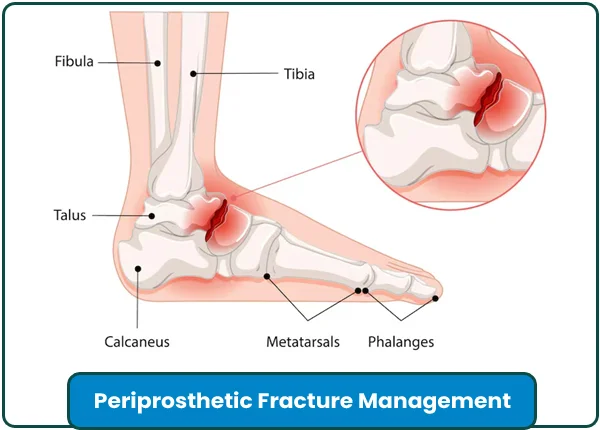
Periprosthetic Fracture Management
Periprosthetic Fracture Management in Noida
A fracture occurring around or near an existing joint replacement implant is known as a periprosthetic fracture. These injuries can be complex because the fracture occurs in an area where an artificial implant is already present. Periprosthetic Fracture Management in Noida requires careful evaluation of the fracture pattern, implant stability, bone quality, and overall health of the patient.
Dr. Rahul Ray provides orthopaedic assessment and individualized treatment planning for patients with fractures occurring around joint replacement implants. Depending on the location and severity of the fracture, treatment may involve non-surgical management, fixation around the implant, revision surgery, or a combination of approaches.
What Is a Periprosthetic Fracture?
A periprosthetic fracture is a break in the bone surrounding a joint replacement or other orthopaedic implant. It most commonly occurs around hip or knee replacement implants but can also affect other joints.
These fractures may occur after a fall, accident, or other trauma. In some patients, weakened bone or loosening of an existing implant may contribute to the risk.
Because the artificial implant can affect the available bone and fixation options, treatment can be more challenging than that of a conventional fracture.
Causes of Periprosthetic Fractures
Periprosthetic fractures may result from several factors, including:
· Falls or direct trauma
· Road traffic accidents
· Sports or physical injuries
· Reduced bone density
· Osteoporosis
· Implant loosening
· Previous revision surgery
· Bone loss around an implant
· Increased age and reduced balance
A relatively low-energy fall can sometimes cause a fracture in patients with weakened bones.
Common Locations
Periprosthetic fractures can occur around different joint replacement implants. Hip and knee replacements are among the common sites.
A fracture may occur:
· Around the femoral component of a hip replacement
· Around the acetabular component of a hip replacement
· Around a knee replacement
· Near the end of an existing implant
· In areas of previously operated bone
The exact location and relationship between the fracture and implant are important in determining treatment.
Why Are These Fractures Challenging?
Treatment of a periprosthetic fracture requires more than simply aligning the broken bone. The stability of the existing implant must also be evaluated.
If the implant remains firmly fixed and the surrounding bone provides adequate support, fracture fixation may be considered. If the implant is loose or the bone stock is significantly compromised, revision surgery may be required.
Previous surgical scars, reduced bone quality, and limited space for fixation can further increase the complexity of treatment.
Diagnosis and Evaluation
A detailed clinical assessment is the first step in managing a suspected periprosthetic fracture. The affected limb is examined for pain, swelling, deformity, movement limitation, and other signs of injury.
X-rays are commonly used to identify the fracture and evaluate the position of the implant. CT imaging may be recommended for complex fractures or when additional detail is required for surgical planning.
The stability of the implant and quality of the surrounding bone are particularly important considerations.
Non-Surgical Treatment
Not every periprosthetic fracture requires surgery. In selected cases, particularly when the fracture is stable and the implant remains appropriately positioned, non-surgical treatment may be considered.
Management may involve:
· Immobilization or support
· Restricted weight-bearing
· Pain management
· Regular imaging follow-up
· Gradual rehabilitation
The suitability of conservative treatment depends on the fracture characteristics and overall patient condition.
Surgical Fracture Fixation
When surgery is required, the objective is to restore appropriate alignment and provide sufficient stability for fracture healing.
Depending on the fracture, fixation may involve specialized plates, screws, cables, or other fixation techniques. The existing implant must be considered while planning the fixation strategy.
The surgical approach is selected according to the fracture location, bone quality, implant stability, and patient's overall health.
Revision Joint Replacement
If the existing implant is loose or cannot provide adequate stability, revision arthroplasty may be necessary.
Revision surgery may involve removal and replacement of the existing implant along with fixation of the fracture. In cases involving substantial bone loss, specialized implants or reconstruction techniques may be required.
The exact procedure depends on the condition of the implant, remaining bone, fracture pattern, and functional requirements of the patient.
Bone Health and Healing
Bone quality can have a significant influence on fracture treatment and recovery. Patients with osteoporosis or reduced bone density may have an increased risk of fractures and fixation-related complications.
Assessment of bone health may therefore be an important part of comprehensive management. Appropriate measures to support bone health may be recommended according to individual needs.
Recovery and Rehabilitation
Recovery following periprosthetic fracture treatment varies significantly between patients. The rehabilitation plan depends on the fracture, surgical procedure, bone quality, implant stability, and overall health.
Rehabilitation may include:
· Gradual restoration of joint movement
· Muscle strengthening
· Balance training
· Controlled weight-bearing
· Walking and gait training
· Functional exercises
Weight-bearing progression should follow the treating surgeon's recommendations to allow appropriate healing and protect the fixation or reconstruction.
When Should You Seek Care?
Patients with an existing joint replacement who develop sudden pain, swelling, deformity, inability to bear weight, or difficulty moving the affected limb after a fall or injury should seek prompt medical evaluation.
Early assessment can help determine whether the implant and surrounding bone have been affected and whether urgent treatment is necessary.
Why Choose Dr. Rahul Ray?
Periprosthetic fractures require individualized treatment because both the fracture and existing implant must be considered. Dr. Rahul Ray focuses on detailed assessment and treatment planning based on the fracture pattern, implant stability, bone condition, and functional needs of each patient.
For patients seeking Periprosthetic Fracture Management in Noida, timely specialist evaluation and appropriate treatment planning can help address these complex injuries and support recovery.
Frequently Asked Questions
1. What is a periprosthetic fracture?
A periprosthetic fracture is a fracture that occurs in the bone around or near an existing joint replacement or orthopaedic implant.
2. Can a periprosthetic fracture be treated without surgery?
In selected stable fractures, non-surgical treatment may be considered. The decision depends on fracture stability, implant condition, bone quality, and the patient's overall health.
3. Does a loose implant require revision surgery?
A loose implant may require revision surgery, particularly when it cannot provide adequate stability for fracture healing. The appropriate treatment depends on individual assessment.
4. Which joint replacements can develop periprosthetic fractures?
Periprosthetic fractures can occur around various joint replacements, including hip and knee implants.
5. How long does recovery take after a periprosthetic fracture?
Recovery varies according to fracture severity, treatment method, bone quality, implant stability, and individual healing. Rehabilitation may continue for several months.
6. When should I consult an orthopaedic specialist?
Sudden pain, swelling, deformity, inability to bear weight, or new movement difficulty around a joint replacement after an injury should be evaluated promptly by an orthopaedic specialist
Category : Periprosthetic Fracture Management