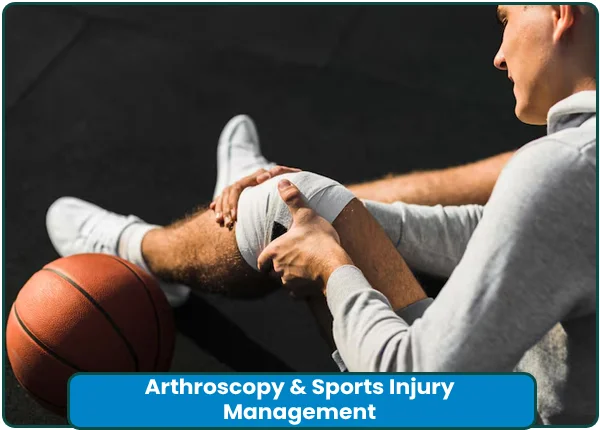
Arthroscopy and Sports Injury Management
Arthroscopy and Sports Injury Management in Noida
Sports and physical activities can place significant stress on the joints, muscles, ligaments, and tendons. Sudden twisting, falls, direct impact, or repetitive movements may result in injuries that cause pain, swelling, instability, and restricted movement. Arthroscopy and Sports Injury Management in Noida focuses on accurate diagnosis and appropriate treatment of these injuries to help patients return to their daily activities and physical performance.
Dr. Rahul Ray provides orthopaedic assessment and treatment for sports-related and joint injuries. Depending on the injury, treatment may include activity modification, medication, physiotherapy, rehabilitation, or minimally invasive arthroscopic surgery.
What Is Arthroscopy?
Arthroscopy is a minimally invasive surgical technique used to examine and treat problems inside a joint. A small camera, known as an arthroscope, is introduced through a small incision, allowing the surgeon to visualize structures within the joint.
Additional small instruments can be used when treatment is required. Arthroscopy may be performed for selected knee, shoulder, ankle, elbow, and other joint conditions.
The appropriate procedure depends on the injury, joint involved, symptoms, imaging findings, and overall functional requirements.
Common Sports Injuries
Sports injuries can affect people involved in professional sports, recreational activities, gym workouts, running, or other physical activities.
Common injuries include:
- ACL injuries
- PCL and other ligament injuries
- Meniscus tears
- Cartilage injuries
- Shoulder instability
- Rotator cuff problems
- Tendon injuries
- Joint dislocations
- Sports-related fractures
- Recurrent joint pain and instability
The severity and treatment requirements vary between patients, making proper evaluation important.
Knee Sports Injuries
The knee is particularly vulnerable to sports-related injuries because it is exposed to twisting, sudden changes in direction, jumping, landing, and direct impact.
Ligament injuries such as ACL tears may cause pain, swelling, instability, and difficulty participating in sports. Meniscus injuries can produce pain, swelling, clicking, or restricted knee movement.
Treatment depends on the injury and the patient's activity requirements. Some injuries may improve with rehabilitation, while others may require arthroscopic intervention.
Arthroscopic ACL Treatment
The anterior cruciate ligament helps provide stability to the knee. An ACL injury may occur during sudden changes in direction, awkward landing, or contact-related sports injuries.
Patients with an ACL injury may experience a popping sensation, swelling, instability, or difficulty returning to sports. A clinical examination and appropriate imaging help determine the extent of the injury.
When surgery is indicated, arthroscopic ACL reconstruction may be considered. Rehabilitation remains an important part of the overall treatment process.
Meniscus and Cartilage Injuries
The menisci help distribute load and provide cushioning within the knee. A meniscus tear can occur due to twisting injuries or degenerative changes.
Depending on the type, location, and severity of the tear, treatment may involve rehabilitation or arthroscopic treatment.
Cartilage injuries can also affect joint function and may lead to pain, swelling, catching, or reduced movement. Early evaluation can help determine the most appropriate treatment approach.
Shoulder Sports Injuries
The shoulder allows a wide range of movement and can be vulnerable during throwing, contact sports, weight training, and falls.
Sports-related shoulder conditions may include instability, labral injuries, rotator cuff problems, and other soft-tissue injuries.
Depending on the condition, treatment may involve rehabilitation, activity modification, medication, or arthroscopic surgery.
When Is Arthroscopy Considered?
Arthroscopy may be considered when symptoms persist despite appropriate non-surgical treatment or when a specific structural problem requires surgical correction.
Potential indications include:
- Persistent joint pain
- Recurrent swelling
- Joint instability
- Meniscus tears
- Ligament injuries
- Certain cartilage injuries
- Mechanical locking or catching
- Selected shoulder instability conditions
The decision to perform arthroscopy is based on clinical findings, imaging, injury characteristics, and the patient's individual requirements.
Diagnosis of Sports Injuries
A detailed assessment is important before deciding on treatment. Dr. Rahul Ray may evaluate the mechanism of injury, pain pattern, swelling, joint stability, range of motion, muscle strength, and functional limitations.
Imaging such as X-rays or MRI may be recommended depending on the suspected injury. MRI can provide detailed information about ligaments, menisci, cartilage, tendons, and other soft-tissue structures.
An accurate diagnosis helps avoid unnecessary treatment and supports a more focused rehabilitation or surgical plan.
Rehabilitation and Return to Activity
Rehabilitation is an important part of sports injury management, whether treatment is surgical or non-surgical. The rehabilitation programme is usually designed according to the injured structure, treatment method, healing stage, and physical requirements of the patient.
It may involve:
- Restoring joint movement
- Improving muscle strength
- Developing balance and coordination
- Gradually increasing activity
- Sport-specific exercises
- Functional training
- Safe return-to-sport progression
Returning to demanding physical activity too quickly may increase the risk of reinjury. Progression should therefore be guided by recovery and functional readiness.
Preventing Sports Injuries
Although not every sports injury can be prevented, appropriate preparation and training may help reduce injury risk. Warm-up exercises, strength training, flexibility work, proper technique, suitable footwear, and gradual increases in activity can support joint health.
Athletes should also pay attention to persistent pain, swelling, instability, or reduced performance instead of continuing activities that aggravate symptoms.
Why Choose Dr. Rahul Ray?
Dr. Rahul Ray provides individualized orthopaedic evaluation for sports injuries and joint conditions. Treatment is planned according to the nature of the injury, functional goals, imaging findings, and response to conservative management.
For patients seeking Arthroscopy and Sports Injury Management in Noida, appropriate diagnosis, timely treatment, and structured rehabilitation can help support recovery and a safe return to physical activity.
Frequently Asked Questions
1. Who is the best doctor for sports injuries in Noida?
If you are experiencing knee pain, a ligament injury, muscle strain, ankle sprain, or a sports-related joint injury, consult an experienced orthopaedic doctor specializing in sports injuries. A sports injury specialist can evaluate conditions such as ACL tears, meniscus injuries, shoulder dislocations, rotator cuff injuries, and ligament sprains. Treatment may include medication when appropriate, physiotherapy, rehabilitation, or arthroscopic surgery depending on the severity of the injury. Dr. Rahul Ray provides orthopaedic evaluation and treatment for sports injuries, knee pain, ligament injuries, and joint problems in Noida.
2. What is arthroscopic surgery, and when is it needed for a sports injury?
Arthroscopic surgery is a minimally invasive orthopaedic procedure in which a surgeon uses a small camera and specialized instruments to diagnose and treat problems inside a joint. Knee arthroscopy and shoulder arthroscopy are commonly used for selected conditions, including meniscus tears, ACL injuries, loose bodies, and certain shoulder ligament or rotator cuff problems. Arthroscopy generally involves smaller incisions than traditional open surgery, but recovery time depends on the injury and the procedure performed. An orthopaedic surgeon can determine whether arthroscopic surgery, physiotherapy, or another treatment is appropriate.
3. What are the symptoms of an ACL tear or meniscus tear, and how are they treated?
An ACL tear or meniscus tear can occur during sports such as football, cricket, badminton, basketball, and running, particularly when twisting the knee, changing direction suddenly, or landing awkwardly. Common symptoms include knee pain, swelling, a popping sensation, difficulty bending the knee, locking, or a feeling that the knee is giving way. Diagnosis may involve a clinical examination and MRI when indicated. Treatment depends on the type and severity of the injury and the patient's activity level. Options include structured physiotherapy, activity modification, and, in selected cases, ACL reconstruction or arthroscopic meniscus surgery.
4. Can sports injuries be treated without surgery?
Yes. Many sports injuries, including muscle strains, ankle sprains, mild ligament injuries, and selected meniscus or shoulder injuries, can improve with non-surgical treatment. Depending on the diagnosis, treatment may include relative rest, activity modification, appropriate pain relief, ice for acute swelling, physiotherapy, strengthening exercises, and a supervised sports rehabilitation programme. Severe ligament tears, unstable joints, displaced meniscus tears, or persistent symptoms may require further assessment for surgery. Early evaluation by an orthopaedic sports injury specialist can help establish the diagnosis and guide safe recovery.
5. How long does recovery take after arthroscopic knee or shoulder surgery?
Recovery after arthroscopic surgery varies according to the joint involved, the type of injury, and the procedure performed. Recovery after a simple knee arthroscopy may take a few weeks, while ACL reconstruction, meniscus repair, or shoulder ligament and rotator cuff procedures may require several months of rehabilitation. Physiotherapy plays an important role in restoring joint movement, muscle strength, balance, and function. Returning to cricket, football, badminton, gym workouts, or other sports should depend on healing, strength, functional testing, and clearance from the treating surgeon rather than a fixed timeline.
Category : Arthroscopy and Sports Injury Management