
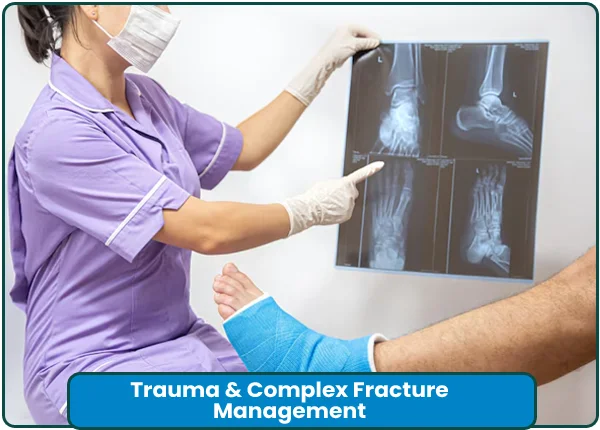
Trauma and Complex Fracture Management
Trauma and Complex Fracture Management in Noida
Traumatic injuries can occur suddenly due to road accidents, falls, sports injuries, workplace incidents, or other high-impact events. While some fractures can be treated with simple immobilization, complex injuries may involve multiple bone fragments, joint surfaces, soft-tissue damage, or significant displacement. Trauma and Complex Fracture Management in Noida requires careful assessment, appropriate stabilization, and a treatment plan based on the type and severity of the injury.
Dr. Rahul Ray provides specialized orthopaedic evaluation and management for traumatic fractures and complex musculoskeletal injuries. The treatment approach is tailored according to the patient's injury pattern, overall health, bone condition, and functional requirements.
What Are Complex Fractures?
A complex fracture is an injury in which the bone is significantly displaced, fragmented, unstable, or associated with damage to surrounding tissues. Some complex fractures may extend into a joint or occur alongside injuries to muscles, tendons, ligaments, nerves, or blood vessels.
These injuries can be more challenging than straightforward fractures and may require advanced imaging, surgical planning, fixation techniques, and structured rehabilitation.
Common Causes of Orthopaedic Trauma
Orthopaedic trauma can result from a variety of situations, including:
· Road traffic accidents
· Falls from height
· Sports-related injuries
· Workplace accidents
· Direct blows or high-impact injuries
· Industrial trauma
· Severe twisting injuries
· Crush injuries
The severity of the fracture depends on factors such as the force involved, direction of impact, patient's bone health, and whether surrounding tissues are also affected.
Types of Complex Fractures
Complex fracture management may involve several types of injuries, including displaced fractures, comminuted fractures, open fractures, intra-articular fractures, and fractures associated with dislocation.
Some patients may also sustain multiple fractures during a single traumatic event. These cases require prioritization of injuries and careful coordination of treatment.
Fractures involving weight-bearing bones or major joints may require particularly detailed planning because improper alignment can affect movement and long-term function.
Diagnosis and Assessment
The first step in trauma management is a detailed clinical assessment. The injured area is examined for swelling, deformity, tenderness, movement limitations, and other signs of injury. The circulation, sensation, and movement of the affected limb may also be evaluated.
Imaging plays an important role in understanding fracture characteristics. X-rays are commonly used, while CT scans may be recommended for complex fractures involving joints or multiple fragments. Additional investigations may be required depending on the patient's condition.
A complete assessment helps determine whether the fracture can be managed conservatively or requires surgical stabilization.
Surgical Management of Complex Fractures
Some complex fractures require surgery to restore bone alignment and provide adequate stability. Depending on the injury, surgical treatment may involve plates, screws, nails, wires, or other fixation systems.
The choice of fixation method depends on the location and pattern of the fracture, bone quality, soft-tissue condition, and functional requirements of the patient.
The objectives of fracture surgery generally include:
· Restoring appropriate bone alignment
· Providing adequate stability
· Preserving joint movement where possible
· Supporting bone healing
· Protecting surrounding tissues
· Facilitating appropriate rehabilitation
Open and High-Risk Fractures
Open fractures require particular attention because the broken bone is exposed through an injury to the surrounding skin and soft tissues. These injuries carry a higher risk of infection and soft-tissue complications.
Initial treatment may include wound assessment, cleaning and debridement when indicated, stabilization of the fracture, and appropriate infection prevention measures. The overall condition of the patient and the extent of soft-tissue injury are important considerations when planning further treatment.
Fractures Involving Joints
When a fracture extends into a joint, accurate restoration of the joint surface may be important for maintaining movement and reducing the risk of long-term complications.
Treatment depends on the fracture pattern and degree of displacement. Some injuries can be managed without surgery, while others may require fixation to restore alignment and stability.
Early specialist evaluation can help determine the appropriate approach.
Multiple Fractures and Major Trauma
Patients involved in high-energy accidents may sustain more than one fracture or additional injuries involving the head, chest, abdomen, or other parts of the body. In such situations, overall stabilization and coordination of care are essential.
Orthopaedic treatment is planned according to the patient's medical condition and the urgency of individual injuries. Once the patient is stabilized, definitive fracture management can be planned appropriately.
Rehabilitation After Fracture Treatment
Recovery does not end after the fracture is stabilized. Rehabilitation can play an important role in restoring strength, movement, balance, and functional ability.
Depending on the injury, rehabilitation may include:
· Gradual joint movement exercises
· Muscle strengthening
· Weight-bearing progression
· Gait training
· Balance exercises
· Functional rehabilitation
The rehabilitation programme is individualized according to the fracture, treatment method, healing progress, and patient's overall condition.
When Should You Seek Orthopaedic Evaluation?
Prompt medical assessment is important after significant trauma, particularly when there is severe pain, visible deformity, swelling, inability to bear weight, restricted movement, numbness, or an open wound near the suspected fracture.
Delaying evaluation of a significant fracture can potentially affect alignment, healing, soft-tissue condition, and long-term function. A specialist assessment helps establish the extent of injury and appropriate treatment pathway.
Why Choose Dr. Rahul Ray?
Dr. Rahul Ray provides individualized orthopaedic care for traumatic and complex fracture conditions. Each injury is assessed based on its specific characteristics rather than following a single treatment approach for every patient.
For patients seeking Trauma and Complex Fracture Management in Noida, comprehensive evaluation, appropriate treatment planning, and structured follow-up can help support bone healing and restoration of function.
Frequently Asked Questions
1. What is complex fracture management?
Complex fracture management involves assessment and treatment of difficult fractures that may be displaced, fragmented, unstable, involve a joint, or be associated with soft-tissue injuries.
2. Do all complex fractures require surgery?
No. Treatment depends on the fracture pattern, alignment, stability, location, soft-tissue condition, and overall health. Some fractures can be managed without surgery.
3. What is an open fracture?
An open fracture occurs when a broken bone is associated with an open wound connecting the fracture area to the outside environment. It requires prompt medical assessment and appropriate treatment.
4. How are complex fractures diagnosed?
Diagnosis usually involves clinical examination and imaging such as X-rays. CT scans or other investigations may be recommended for certain complex or joint-related fractures.
5. How long does it take for a complex fracture to heal?
Healing time varies depending on the bone involved, fracture severity, treatment method, age, bone health, and other individual factors.
6. Why is rehabilitation important after fracture treatment?
Rehabilitation helps restore joint movement, muscle strength, balance, walking ability, and overall function after the fracture has been appropriately stabilized
Category : Trauma and Complex Fracture Management